

Japanese Oil Prices Surge Due to Russian Sanctions While Global Markets Rise Modestly: Impact of Global Energy Crisis
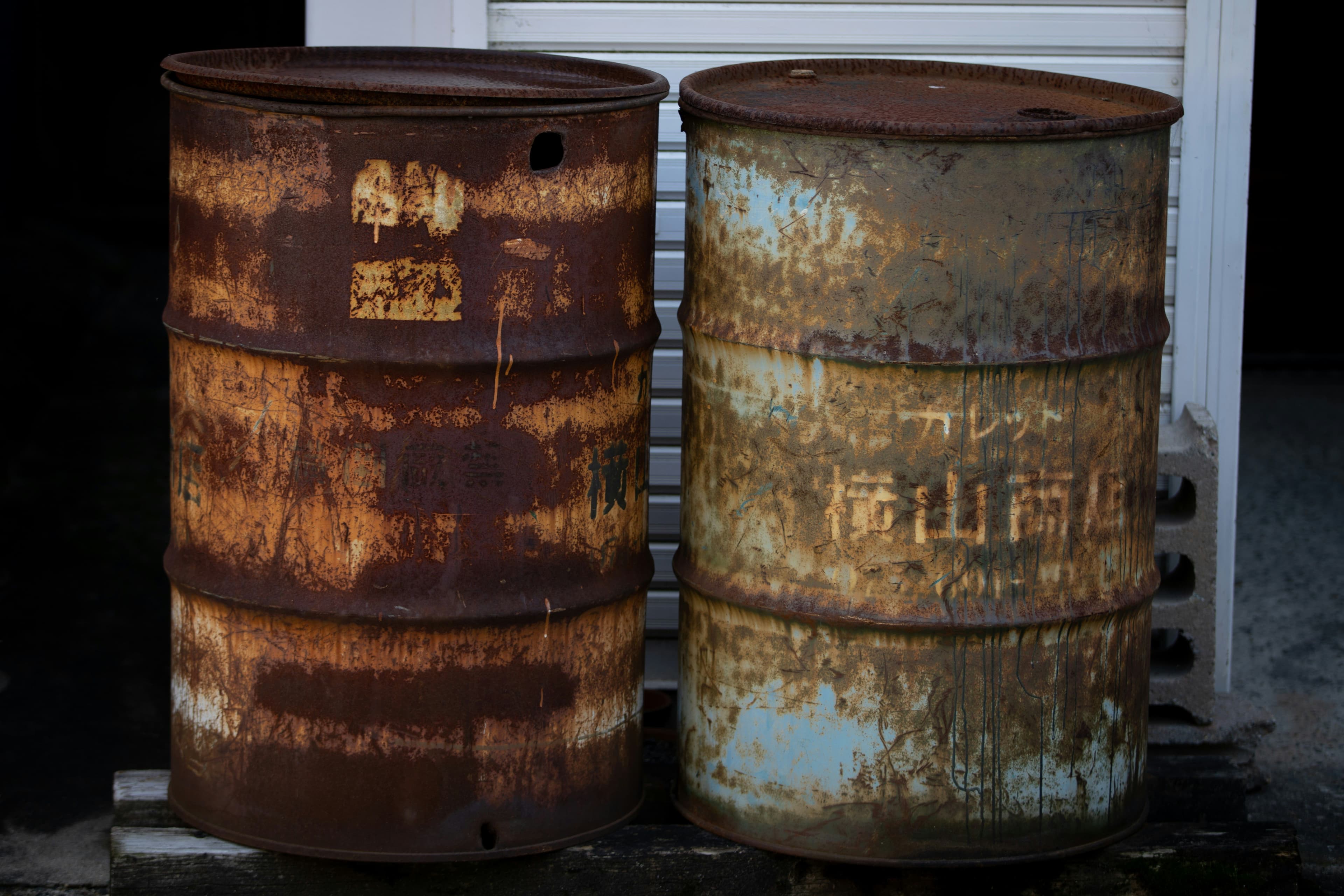
An 8.5% price surge in just one week—that's the "shock" Japan's oil market is experiencing, while global oil prices rose a modest 1-1.8%. Did you know that a taxi driver in Tokyo now pays $87-89 for a barrel of oil, $6-7 higher than global prices? This is the direct consequence of new US sanctions targeting Russia's oil sector and Ukraine's campaign of attacks on energy infrastructure.
It's hard to imagine how such a sudden spike in fuel costs over just a few months directly impacts the lives of millions of Japanese people—and us as well. Is this the beginning of a new energy crisis? And why has the oil market "split" so dramatically?
Japan: When 3.8% of Russian Oil Supply Becomes "The Last Straw"
To understand this crisis, we need to look at a seemingly small number: 3.8%. That's the percentage of crude oil Japan imports from Russia—equivalent to 115,000 barrels per day out of total demand of 3.05 million barrels per day.
This figure may seem insignificant, but in today's tight energy markets, it has become "the last straw." Why? Because Japan must import 95% of its crude oil needs and now faces fierce competition with two major consumers of Russian oil: China (1.6 million barrels/day) and India (1.4 million barrels/day)—countries maximizing their purchases of discounted Russian crude.
Yamamoto Kenji, a 52-year-old taxi driver in Tokyo, shared: "My fuel costs have increased 25% in just the past month. I've had to raise fares to cover expenses, but customers are starting to complain. This is the first time in 20 years of driving that I've felt this worried."
Japan's crude oil import structure according to latest METI data:
- Middle East: 88% (Saudi Arabia 32%, UAE 25%, Kuwait 18%, Qatar 13%)
- Russia: 3.8% (115,000 barrels/day)
- Other countries: 8.2% (Malaysia, Brunei, Australia)
Russian Oil Sanctions: The "Opening Blow" from Washington
The primary cause of this oil price "fever" stems from America's new strategy: expanding the "blacklist" to 50-70 Russian oil and gas companies, including "super corporations" like Lukoil (producing 1.7 million barrels/day) and Gazprom Neft (1.3 million barrels/day).
Particularly dangerous are "secondary sanctions"—anyone doing business with sanctioned Russian companies will also face penalties. This creates a "chilling effect" causing shipping companies, insurers, and banks to refuse dealings with Russian oil, even when not directly prohibited.
The frightening figure: Russia currently produces 11.3 million barrels of crude oil daily, accounting for 11% of global production (103 million barrels/day). If this supply is severely cut, markets will face a shortage of 2-3 million barrels/day—enough to drive oil prices to "insane" levels.
Dr. Nakamura Akira, energy expert at Tokyo University, noted: "This isn't just economic warfare but a reshaping of the global energy map. Japan is becoming a 'hostage' to this geopolitical confrontation."
Ukraine's Infrastructure Attacks: When War "Ignites" the Entire Oil Industry
While the US tightens the economic noose, Ukraine has escalated to "direct attacks" on infrastructure. In August, Ukrainian forces conducted 18 drone and missile attacks on the heart of Russia's oil and gas sector.
"Devastating" damage: The Ryazan refinery—a "super plant" with 17 million tons/year capacity—was forced to halt operations for 3-4 weeks. Along with Novokuibyshevsk (7 million tons/year) and Syzran (6 million tons/year).
The result? Ukraine has "paralyzed" 800,000-1 million barrels/day of Russian refining capacity—equivalent to 20-25% of the country's capacity. Consequently, Russia is importing gasoline from Belarus and Kazakhstan for the first time in 30 years!
"Domino Effect" Across Asia: When Japan "Sneezes," the Entire Region "Catches Cold"
Japan's oil "thirst" is spreading like a "domino effect" throughout Asia:
- South Korea: oil prices up 4.2% in the past week
- Singapore: up 3.8%
- Thailand: up 3.1%
Weak currencies compound the situation:
- Japanese Yen down 12% over six months
- Korean Won down 8%
- Thai Baht down 6%
- Malaysian Ringgit down 4%
In Vietnam, despite not being directly impacted thanks to 40% domestic fuel production meeting demand, A95 gasoline prices have risen from 24,500 to 26,300 VND/liter—a 7.3% increase over three weeks.
Ms. Nguyen Thi Lan, who owns a pho restaurant in Hanoi, complained: "Transportation costs for ingredients have increased over 10%, forcing me to raise pho prices by 5,000 dong per bowl. Customers understand but still complain because motorcycle fuel costs are also rising."
Three Scenarios for the Global Oil Market
Scenario 1 - "Controlled Tension" (55% probability):
- Russia finds alternative markets through China and India
- Ukraine reduces infrastructure attack intensity
- Oil prices fluctuate between $80-90/barrel
- Regional spread of $4-6/barrel
Scenario 2 - "Crisis Explosion" (35% probability):
- US imposes comprehensive sanctions, Russian oil isolated
- Ukraine intensifies infrastructure attacks
- Oil prices could "rocket" to $100-130/barrel
- Replay of 2008 energy crisis
Scenario 3 - "Unexpected Cooling" (10% probability):
- Parties reach tacit agreements
- Markets stabilize
- Oil prices fall to $70-75/barrel
Smart Investment Strategy During the "Oil Storm"
Golden Opportunities:
- Oil stocks: ExxonMobil, Chevron, BP up 15-25% this past month
- Energy ETFs: USO, OIL for direct oil price investment
- Shipping: Oil tanker companies benefit from high demand
- Renewable energy: Solar, wind become attractive when oil is expensive
Risks to Avoid:
- Aviation: Vietnam Airlines, Vietjet report fuel comprises 40% of costs
- Logistics: Transportation costs up 8-12% this past month
- Chemicals: Crude oil is primary input material
- Tourism: Higher travel costs reduce demand
Le Minh Tuan, an 8-year energy trader in Ho Chi Minh City, shared: "I switched from airline stocks to PV Gas in July. Currently up 22% but only invested 15% of my portfolio because I know this market is extremely volatile. The key is reading geopolitical signals early."
"Dual" Impact on Vietnam's Economy
Immediate Negative Impact:
- Accelerating inflation: Each $1/barrel oil increase pushes Vietnam's CPI up 0.15-0.2%
- Logistics costs "explode": Transportation rates already up 8-12% this month
- Aviation "grimaces": VNA, Vietjet lose 15-20 billion VND profit/quarter per USD oil increase
- Import-export price surge: Additional costs of $2-3 billion/year if oil reaches $100/barrel
Offsetting Positive Impact:
- "Dynamic duo" PVN-GAS soar: GAS up 25%, PVD up 18% this past month
- Budget "relief": Additional 15-20 trillion VND if oil stays above $85/barrel
- Energy greening: Solar, wind more attractive when oil is expensive
Conclusion: In times of volatile oil markets, understanding geopolitics and investment flexibility isn't just an advantage—it's a survival necessity
The current energy crisis has proven that the era of "unified" global oil markets has ended. In its place is a "fragmented energy world" where politics determines prices more than supply and demand.
To succeed in this environment:
- Monitor geopolitical news daily—a tweet from Washington or an attack in Ukraine can change oil prices within hours
- Diversify intelligently—balance opportunities from oil and gas with volatility risks
- Invest long-term in energy transition—green trends will accelerate
- Prepare personal finances—ready for scenarios where fuel prices surge
Remember: historically, oil prices have fluctuated from -$37 to $147/barrel. What matters isn't accurate prediction but sufficient flexibility to adapt. Because in this new energy world, only those who understand the "rules" of geopolitics and adapt quickly will gain competitive advantage.
Disclaimer: This article is for informational and analytical purposes only and does not constitute investment advice. All investment and business decisions should be carefully considered based on individual circumstances and with consultation from professional experts. Barclay Club encourages readers to conduct thorough research before making important financial decisions.