

Amazon's $1.2 Billion Bet on Zoox: When Logistics Giants Play Venture Capitalist
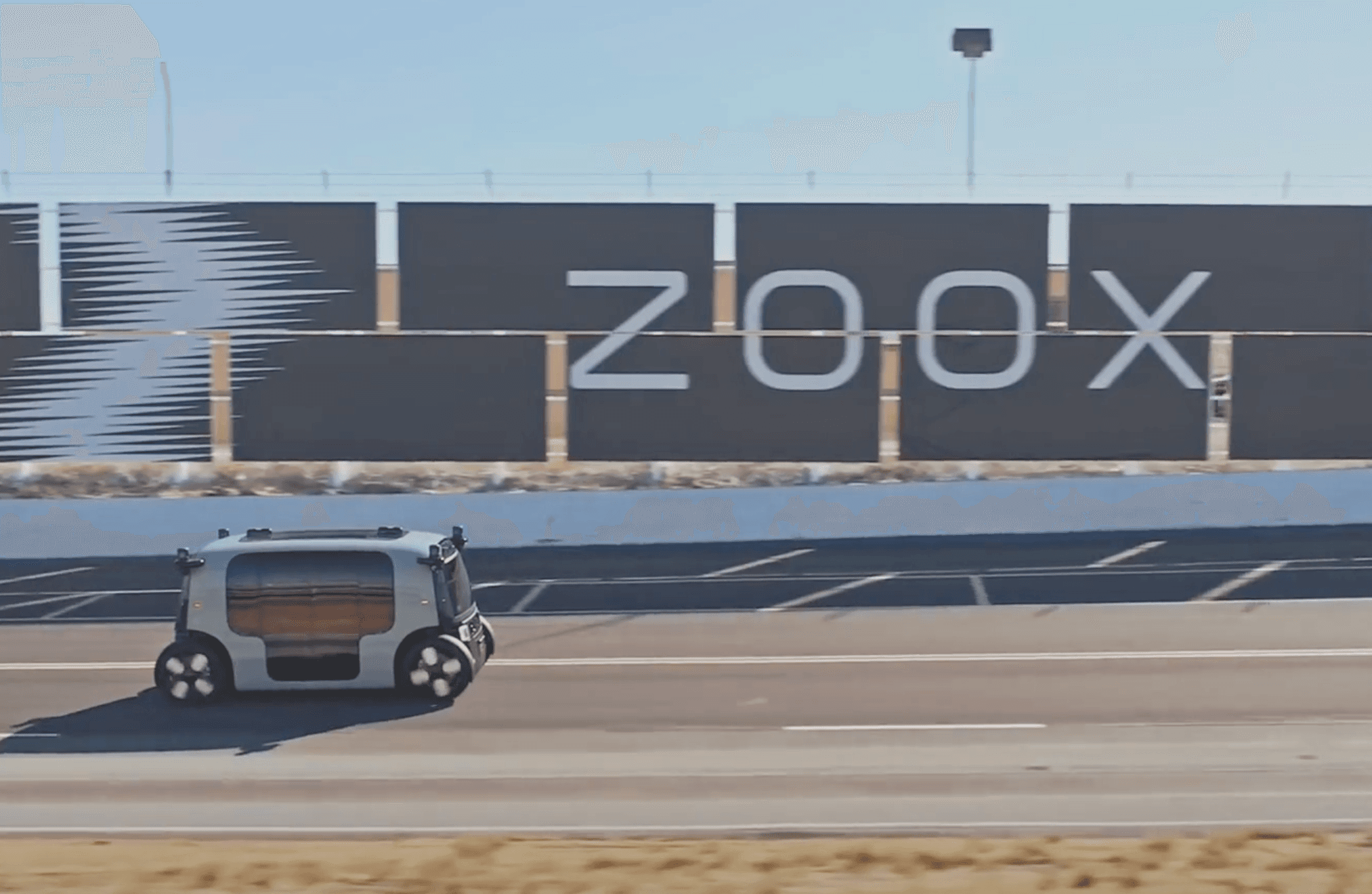
The retail giant's robotaxi dreams reveal more about American urban economics than autonomous driving
The $22 bowl of pho I'm eating in the Marina District would cost me 50,000 Vietnamese dong—about $2—in District 1, Saigon. That 11x markup isn't just San Francisco rent; it's the price of disconnection from efficient systems. Which brings me to Amazon's $1.2 billion acquisition of Zoox, a move that tells us less about self-driving cars and more about how American cities have become economic pressure cookers that even Jeff Bezos needs robots to solve.
The Real Play Isn't Ride-Hailing
While tech journalists breathlessly compare Zoox's bidirectional robotaxis to Waymo's retrofitted Chrysler Pacificas, they're missing Amazon's actual strategy. This isn't about competing with Uber or even Tesla's upcoming Cybercabs—it's about solving the last-mile delivery problem that's been hemorrhaging money since e-commerce began.
As someone who spent years calculating risk premiums in Hong Kong's derivatives markets, I recognize a hedge when I see one. Amazon is betting $1.2 billion that urban density will eventually price human drivers out of the equation entirely. Their math is brutally simple: last-mile delivery accounts for over 50% of total shipping costs, and those costs are rising faster than San Francisco rent prices—which, trust me, is saying something.
Có tiền mua tiên cũng được (with money, you can even buy a fairy), as my Vietnamese grandmother used to say. Amazon has the money, and they're buying the fairy tale that robots can solve what human urban planning couldn't.
The Cultural Arbitrage of Autonomous Logistics
Walking from my Chestnut Street apartment to Union Square costs me $3.50 on Muni, but the cultural distance between my neighborhood's $18 bone broth and Chinatown's $3 congee reveals why Amazon needs Zoox. American cities are economically segregated in ways that would seem absurd to anyone navigating Hong Kong's efficient MTR system or Saigon's chaotic but functional motorbike ecosystem.
Zoox's 10,000 annual production target isn't just about scaling manufacturing—it's about creating a parallel transportation network that can navigate between these economic zones without the cultural friction that makes human drivers avoid certain neighborhoods or demand surge pricing.
The bidirectional design isn't aesthetic; it's economic. In dense Asian cities where I learned to trade, space efficiency translates directly to profit margins. A robotaxi that doesn't need to turn around can serve 30% more rides per hour in urban environments. Amazon understands this math because they've been optimizing warehouse movements for decades.
The Hidden Infrastructure Bet
What excites me most about Amazon's Zoox strategy isn't the robotaxis themselves—it's the infrastructure play hiding in plain sight. Every Zoox vehicle becomes a mobile AWS edge computing node, collecting real-time data about urban traffic patterns, consumer behavior, and delivery optimization routes.
This data arbitrage opportunity makes the $1.2 billion acquisition look conservative. While Waymo focuses on passenger safety metrics and Tesla obsesses over Full Self-Driving capabilities, Amazon is building the nervous system for a logistics network that could reshape how goods move through American cities.
From my trading days in Central District, I learned that the most profitable positions aren't the obvious ones—they're the asymmetric bets that create new markets rather than competing in existing ones. Amazon isn't just buying a robotaxi company; they're investing in urban economic redesign.
The Marina District Reality Check
The 220,000-square-foot Zoox production facility in Hayward represents something deeper than manufacturing capacity. It's Amazon's acknowledgment that American urban economics are broken at a fundamental level. When a company known for ruthless efficiency needs to build custom vehicles to navigate our cities profitably, that's not a technology problem—it's a systemic failure.
The facility's ability to produce three vehicles per hour at full capacity tells me Amazon expects urban delivery density to increase dramatically. They're not just preparing for current demand; they're betting that American cities will become even more economically stratified, requiring specialized logistics solutions to bridge the gaps.
Một xu cũng là tiền (even one cent is money), but in San Francisco's economy, those cents add up to billions in inefficient urban transportation costs that Amazon believes robots can eliminate.
The Long Game: Infrastructure as Competitive Moat
Amazon's timeline reveals their true strategy. Las Vegas launch in 2025, San Francisco in 2026, then Austin and Miami—these aren't random markets. They're testing grounds for different urban density models, from tourism-dependent economies to tech hubs to emerging Sun Belt cities.
By 2027, when Zoox hits its 10,000 annual production target, Amazon will have three years of real-world data on how autonomous logistics perform across different American urban environments. That data becomes the foundation for a delivery network that competitors can't replicate without similar multi-billion-dollar infrastructure investments.
The genius isn't in the technology—it's in using Amazon's scale to make the technology economically viable before anyone else can afford to compete.
The Bottom Line
Amazon's Zoox bet represents the maturation of American capitalism's response to urban dysfunction. Instead of fixing cities, we're building robots to navigate around their economic inefficiencies. From a pure investment perspective, it's brilliant. From a social perspective, it's a troubling admission that we've given up on creating livable urban environments.
But ăn quả nhớ kẻ trồng cây (when eating fruit, remember who planted the tree)—the same economic pressures that make Zoox necessary also created the wealth concentration that funded Amazon's ability to pursue this solution.
Whether you're bullish or bearish on robotaxis, Amazon's $1.2 billion Zoox acquisition signals one clear trend: the future belongs to companies that can afford to build infrastructure around our problems rather than solve them.
Disclaimer: These observations reflect the author's analysis of cross-cultural logistics economics and should not be considered investment advice. Autonomous vehicle markets change faster than San Francisco housing prices, and both can be equally unpredictable. Past urban planning failures don't guarantee future robotaxi success, though they often predict where venture capital will flow next.